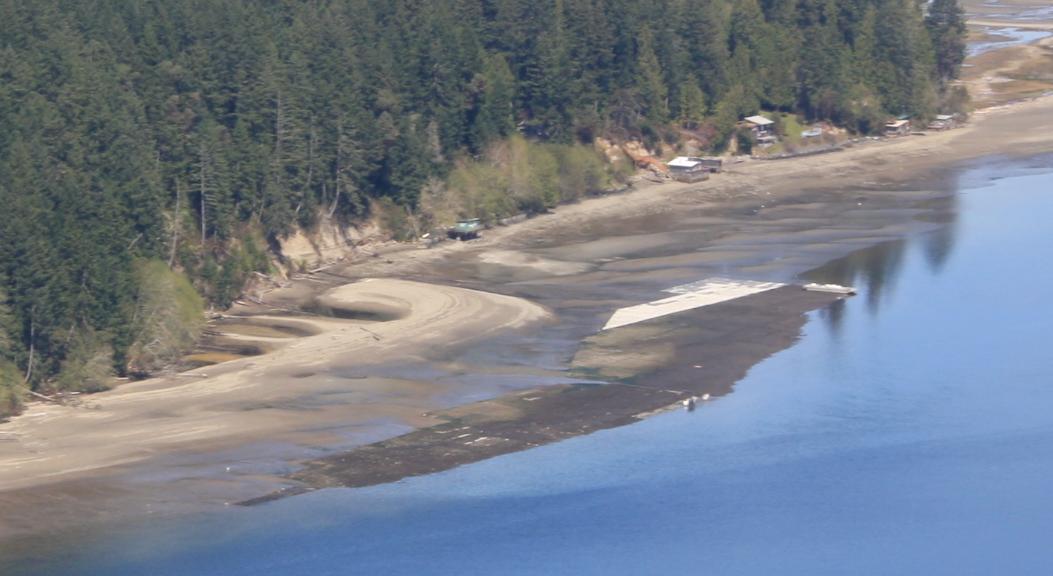
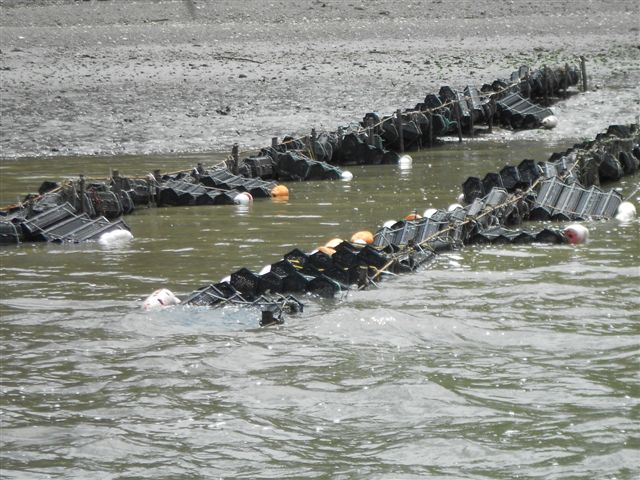
Our mission is to protect the habitat of Puget Sound tidelands from the underregulated expansion of new and intensive shellfish aquaculture methods. These methods were never anticipated when the Shoreline Management Act was passed. They are transforming the natural tideland ecosystems in Puget Sound and are resulting in a fractured shoreline habitat. In South Puget Sound much of this has been done with few if any meaningful shoreline permits and with limited public input. It is exactly what the Shoreline Management Act was intended to prevent.

Get involved and contact your elected officials to let them you do not support aquaculture's industrial transformation of Puget Sound's tidelands.

Governor Inslee:
Showing posts with label shoreline master program. Show all posts

Sunday, May 12, 2013

10 Shellfish Nurseries in Oakland Bay Marina Proposed by City of Shelton Ammendment to Draft Shoreline Master Program

The Mason County Journal reported that at a public hearing held May 6 the City of Shelton announced it was considering amending its draft of the updated Shoreline Master Program in order to allow up to 10 of Oakland Bay Marina's boathouses to be converted to shellfish nurseries. (see page 2/3 here for amendment) In the comments about the amendment it is noted there have already been 2 permits for conversion from public use to private commercial use, with 3 more being considered. The first reading of the proposed amendment and updated SMP will be held at the commission's May 28 meeting.
 
Oakland Bay Marina and Existing Nursery
(click to enlarge)
 
While City Planner Jason Dose felt the conversion was "a fairly benign use" he did acknowledge  they were "pushing the envelope" by suggesting 10 boathouses be converted. It wasn't clear whether there are any "liveaboards" currently using any of the boathouses and how they feel about the commercial operations.
 
Members of the public present expressed a variety of concerns, one being the conversion of that portion of the marina to private commercial use, preventing public access. Impacts on tourism was another area focused on as was the need to upgrade the infrastructure, with water pressure being described as providing "a teaspoon per hour." Commissioner Mike Olsen also pointed out that the Oakland Bay Marina is the only public marina in Shelton.
 
One alternative suggested was to add an additional float. Another suggestion may be to simply expand the nursery facility already in operation further away from the marina, near the Manke gravel barge loading area, already converted to private commercial use.


Shellfish companies covet the area as it has power, a necessity for "upwellers" used in nurseries, and it is adjacent to a public boat launch which they use for loading and off-loading equipment.
 
At the May 28 hearing, the City will explain how the amendment meets the first two goals from Chapter 3, "Shoreline Master Program Goals and Policies".
 
3.1 General Shoreline Goals
 
SMP1.1. Adequately protect and preserve shoreline areas from incompatible types and intensities of development. Reserve shoreline areas for water-related uses. [is growing shellfish in a marina a "compatible" development?]

SMP 1.2. Increase public access to shoreline areas by increasing the opportunities for the public to reach, touch and enjoy the water’s edge, travel on the waters of the state and view the water and shoreline from adjacent locations. [does removing 15% of the boathouses from public access increase opportunities?]

Wednesday, April 10, 2013

Daylight Minus Tides Begin: Shellfish Attorneys Continue to Fight Regulatory Oversight

 
Daylight minus tides begin to expose what's been going on in Puget Sound's tidelands, the "most valuable and fragile of its natural resources" (Shoreline Management Act).
April 10, 2013, the first daylight minus tides begin. Geoduck PVC and netting will once again appear as Puget Sound's waters recede, revealing a transformation which could not have been imagined when the Shoreline Management Act was passed in 1971. State and local agencies have allowed themselves to become agents of the shellfish industry's attorneys and contract scientists who fight every attempt to control their developments in the tidelands. [click here for Pierce County's response to the Chelsea Farm/Detienne attorney's demands that conditions be dropped or modified] In the letter is found the pressures county employees are put under by the industry which has evolved and who sees no problem with dropping off over 80 exhibits the day of a hearing, many of questionable relevance beyond creating a burden on those responsible for regulating the industry.
 
April and May Tide Tables (Olympia) - click to enlarge


Considered a "preferred use" when the Shoreline Management Act was passed in 1971, the shellfish industry has evolved into the very industrial development which the Shoreline Management Act was intended to protect the shorelines of Puget Sound from for the future generations. Instead of small family farms earning a living through spreading oyster shell and spat along the tidelands, creating a natural ecosystem, they have been replaced by large corporations using forests of PVC pipes, netting and growout bags requiring the displacement of all native species in the way.
 
Harstine Island, south of Wilson Point on Taylor Shellfish tidelands
 

PVC and growout bags are claimed to provide "structure" for other species. Ignored is that native species are removed before placement of the "structure" and that the "structure" is ripped out after one to two years, creating an additional net loss to the ecosystem. "Tidelands return to a natural state in 6 to 9 months." Seemingly forgotten is they are never allowed to return to a natural state, but instead are placed in a perpetual cycle of creation and destruction of artificial ecosystems. Science? A Master's Thesis is used in place of peer reviewed studies. Peer reviewed study used? One in which geoduck are grown for 1 year (not five), removed, followed by a "pretend" harvest. Is that really what decisions should be based on? 
 
PVC tubes for geoduck and growout bags for oysters. Natural?
 
An industry who had once been seen as one of the few providing a means by which the goals of the Clean Water Act could be achieved has become one which fights to control any shoreline developments through regulations, for its direct financial benefit. Creation of wilderness areas is fine, as long as it does not involve their tideland developments. Yet when they are asked to work within those same standards it is somehow a "regulatory burden" preventing "family wage jobs" from being created. Jobs apparently not wanted by the unemployed, or few others. In early 2012, Taylor Shellfish had to let go of 160 employees as the result of an immigration audit. In Washington DC, lobbying efforts for immigration reform continue as the industry cannot find domestic workers it needs.
 
Taylor Shellfish geoduck farm in Hammersley Inlet.
A benign industry of the past has become one who sees no problem with septic fees being added to shoreline property taxes, already taxed higher than any other property, yet winces when complaints of an acre of tidelands producing over $1 million in revenue is only paying $2 in property taxes, and little else in the way of taxes. Claims of its being a "preferred use" no longer apply to the methods and structures used. It is one which creates "family wage jobs" so disliked by everyone it runs the risk of being shut down due to a lack of documented immigrant workers. And it is one which has no problem demanding state taxpayers pay for water quality monitoring and funding for research to support hatcheries unable to produce non-native species it wants to grow.
 
The waters recede as the months of summer approach, revealing an industry who would prefer they stay hidden. As the waters recede and expose the reality of what the shellfish industry has become the agencies responsible for ensuring the Shoreline Management Act is implemented as it was intended need to evolve as much as the industry has.
 

Monday, February 25, 2013

Fin Fish Net Pen Aquaculture: "A Handful of Gimme and a Mouthful of Much Obliged"

Salmon Net Pens
are not
Water Dependent

Upland fish farm facilities exist,
eliminating "water dependency."


Enclosed systems exist, eliminating
open nets and the spread of sea lice.
 
 
The Olympic Peninsula Environmental News questions what the Department of Ecology (DOE) has become, bringing in Fred Neil's song, "A Handful of Gimme," to describe the current challenge Jefferson County is going through in developing its Shoreline Master Program (SMP). [click here for entry] 

Saturday, February 23, 2013

Seattle Shellfish - Going to the Bank

 
Revenues from geoduck
planted on trespassed state lands
slated to begin coming in.
 
February 13 the Department of Natural Resources (DNR) issued a Mitigated Determination of Non-significance (MDNS) SEPA decision on a proposal by Seattle Shellfish to harvest geoduck from state lands they were found to be trespassing on in 2009. The determination will allow Seattle Shellfish to harvest a claimed 17,000 pounds (~11,000 geoduck) from a planted area which would normally be expected to produce >33,000 pounds, or >22,000 geoduck (>1 per square foot).*
Estimated gross: $238,000.
 
Comments are due by February 27.
(* For a comparison of acreage yields, in 2008 and 2009 Arcadia Point Seafood reported 68,000 pounds having been harvested from the Myer "farm" of 25,000 square feet. See survey below for areas.)
 
Arcadia Point, Totten Inlet
Seattle Shellfish and Arcadia Point Seafood Trespass
(click to enlarge)
(Note probable sediment plume from harvesting
of Myer parcel to the south of the trespass area.)

Background
In 1998 Seattle Shellfish leased tidelands owned by the Lachine family with the intention of planting and cultivating shellfish, including geoduck. The Broehl's and Myers tidelands, to the south, were leased by Arcadia Point Seafood's Steve and Vicki Wilson. After the first harvest of geoducks the Broehl and Lachine tidelands were replanted, followed later by the Myers. After complaints of probable trespass were made to DNR, a survey in 2009 showed that in fact most of the tidelands used for planting geoduck on were owned by the state.
 
2009 Survey showing trespass at Agate Point

Negotiations
After the state had determined there had been cultivation and harvesting of geoduck on state owned tidelands the Attorney General and Seattle Shellfish entered into negotiations. Those negotiations resulted in a settlement which allowed Seattle Shellfish to retain ownership of the geoduck planted on state lands and a financial payment to the state. Separate trespass settlements with Arcadia Point Seafood and Taylor Shellfish (to the north, in Pickering Passage) resulted in a similar agreement.

Settlement Agreements
Seattle Shellfish agreed to pay $75,000 upon harvest, Arcadia Point's Steve and Vicki Wilson agreed to pay $117,000, and Taylor Shellfish agreed to pay $225,000. None would be permitted to use the tidelands after harvest was completed. (Note: These are separate from Taylor Shellfish's trespass settlement on the Thurston County side of Totten Inlet.)
[click here for Seattle Times article]

Financial Benefit
Assuming Seattle Shellfish's number of 17,000 pounds is accurate, and their geoducks are of #1 grade, at $14/pound they will gross $238,000, less the $75,000 fee to the state, leaving them a net of $163,000, less relatively minor labor and material expenses. Assuming the previous "crop" was the same amount, Seattle Shellfish will have ended up netting over $300,000 for the use of state tidelands.

Comment: Lawyers Are Not Inexpensive
With current legal bills from Seattle Shellfish's law suit against the Army Corps being incurred these funds will no doubt be appreciated by its owners. [click here for papers filed against the Corps] Most likely Arcadia and Taylor will also find their geoduck revenues generated off of state lands helpful as their legal expenses rise with their permit appeals and the fairness of Shoreline Master Program updates coming into question.

Citizens do not have the luxury of geoducks to finance their efforts in protecting Puget Sound's tideland habitat, only passion and time. Numerous groups are currently involved in trying to contain the expansion of the shellfish industry. APHETI (APHETI@gmail.com) , Case Inlet Shoreline Association and Coalition to Protect Puget Sound Habitat (the latter 2 at info@caseinlet.org) are all heavily involved.  Friends of Burley Lagoon is now becoming organized, aligning itself with the previous two. You can make a difference, like those who helped create the Shoreline Management Act in 1971 did.

Saturday, February 16, 2013

Representation without Taxation: Who is paying for what?

"The legislature declares that the interest of all of the people shall be paramount in the management of shorelines of statewide significance."
Shoreline Management Act

Send the county a "matrix" on how regulations are preventing us from becoming what we want.
Federal, county, state agencies, and taxpayers creating a regulatory framework to control the growing number of structures and developments on Puget Sound's tidelands supporting shellfish aquaculture have experienced first hand the immense amount of money being paid to attorneys to craft regulations in their favor. Every county has had their Shoreline Master Programs read through and commented on by shellfish attorneys.

Thursday, February 14, 2013

Facets of National and State Aquaculture Initiatives Questioned by United States Representative and Washington Business Groups

NOAA's Involvement in Aquaculture Questioned
United States Representative Markey, Democrat from Massachusetts running for Senator Kerry's seat, is urging the Commerce Department [NOAA] not to expand its jurisdiction to regulate aquaculture at a time “when it is failing its core fisheries mission to restore wild stocks, like cod, haddock and flounder.”

Representative Markey


In an article in the  Gloucester Times it states "Under outgoing NOAA administrator Jane Lubchenco, the agency has begun emphasizing aquaculture in the U.S., which is a bit player, producing less than $1 billion in product value in a $70 billion global market."

Wednesday, February 13, 2013

Shellfish Politics, Shellfish Initiatives, and the Shoreline Management Act

"The public has no idea how rapidly technology is reshaping aquaculture in the U.S." April 2010 email from shellfish consultant Jack Rensel to NOAA.

Shellfish Initiatives do not have a role in the Shoreline Master Program Updates.
Recent comments from attorneys representing the shellfish industry have claimed many times that NOAA's "National Shellfish Initiative" and the "Washington Shellfish Initiative" are clearly an indication of the importance of the shellfish industry. It adds that Washington's Shellfish Initiative clearly indicates shellfish aquaculture should be prioritized in any Shoreline Master Program update, no matter what the method, no matter where the location. In a letter to the Olympia City Council it states "revisions are also necessary to ensure the SMP Update is consistent with" the National and Washington Shellfish Intiatives. This is fundametally wrong and not what Shoreline Master Programs are supposed to consider.

Look a little deeper.

Oops, didn't I mention that?

Thursday, January 31, 2013

Does Mason County Really Care About the Shoreline Management Act?

Where are the monitoring results of impacts which are supposed to be posted on Mason County's website as agreed to in November of 2010?

 
Spencer Cove Geoduck Nursery
and Barges
Seattle Shellfish
(click to enlarge)
 
In the picture above, taken in July of 2012, Seattle Shellfish's "geoduck nursery" facility and barges loaded with bags of PVC pipe are seen. Had monitoring of impacts begun? No.
 
Kiddie Pools in Spencer Cove's Intertidal Tideland
 (click to enlarge)
 
Background 
As a result of citizen concerns over adverse impacts from ~1,000 "kiddie wading pools" on the nearshore environment, those pools were removed. In their place a floating facility the length of a football field was proposed for which a permit application was submitted by Seattle Shellfish. The permit approval was appealed to the Shoreline Hearing Board by Case Inlet Shoreline Association (CISA) and an agreement was negotiated in good faith between Mason County, Seattle Shellfish and CISA in November of 2010. The case was dismissed and Mason County issued the permit November 24, 2010.
 
The November 2010 Agreement - Hire a consultant and post the results quarterly.
That settlement agreement and resulting permit resulted in a condition which required Mason County to hire a consultant to implement a five year monitoring plan. That monitoring plan would be paid for by Seattle Shellfish and required the County to post the results of that monitoring plan on its web site quarterly.
 
May 2012 - Where is the consultant? [click here for RFP]
In May of 2012 a Request for Proposal was issued by Mason County asking for qualified consultants to respond. After reviews of responses, Hart Crowser Inc. was selected and October 2, 2012 Commissioners Sheldon and Ring Erickson voted to approve signing the Professional Services Agreement. Commissioner Bloomfield, a Seattle Shellfish shareholder, recused himself.
 
January 31, 2012 - Where is the plan and where are the quarterly results?
Over two years after the settlement agreement was signed and agreed to, Mason County has yet to post anything on its web site except the RFP and the "Decision." [click here] In the mean time, Seattle Shellfish began installation of the floating facility in the Spring of 2012 with final completion in the late summer. A consultant who was to have been hired to determine the impacts had yet to be hired. How meaningful will the results be if there is no baseline to judge impacts from?
 
The Lesson: Get Involved in Mason County's Shoreline Management Plan - The shellfish industry has been for far longer than you know.
The meaningful result from this is Mason County's focus is not sharp when it comes to ensuring aquaculture will not result in harm to the near shore environment. It is why citizens of Mason County need to be aware of what is happening with the Shoreline Master Program update and be invovled. The shellfish industry has been invovled in crafting the update to their benefit since at least May of 2012, as seen in this comment from Arcadia Point Seafood to others in the industry: Mason County is working on its Shoreline Management Plan and Vicki [Wilson with Arcadia Point Seafood] is a member of their 20-member citizen advisor committee. They are currently discussing aquaculture policy.
 
The next meeting is at 411 N. 5th Street: February 11, 2012; 6:00 PM; Building 1-BOCC Chambers; Subject: Draft SMP Workshop 2
Commissioners may be contacted at [this site] 

Saturday, January 19, 2013

Mason County Shoreline Master Program Update Hearings Scheduled

Mason County has published a "Public Notice" and the Shelton-Mason County Journal has written on two important upcoming workshops on the County's Shoreline Master Program Draft Policies and Regulations. They will be held:

January 28, 6PM at 411 North 5th Street, Shelton

February 11, 6PM at 411 North 5th Street, Shelton (aquaculture will be discussed at the this meeting)

To view differences between the existing "Policies" and "Regulations" and those proposed, click on either of the two links here:
[click here for "red line" Policies]
[click here for "red line" Regulations]

Also available is an interactive map of Mason County to find such things as how waterfront areas are defined (e.g., nature; conservancy; etc.), where beach front armoring (i.e., bulkheading) is located, or public beach front access is found. (Despite a wealth of current information available, not found are where current shellfish operations are located.) [click here for interactive map]

Thursday, January 17, 2013

Tuesday, January 8, 2013

Mason County Shoreline Master Program Update: Citizen Advisory Meeting January 9

Mason Count will hold its final Citizen Advisory Committee (CAC) meeting on the Draft Shoreline Master Program (DSMP) update. Its meeting in December was canceled. The public is encouraged to attend and hear how the document is being crafted by the various parties involved.

Time and Date:  9AM-12PM, Wednesday, January 9.
Location:  100 W Public Works Drive
Discussion Item: Draft SMP

It is unclear whether a copy of the DSMP will be made available to the public at the meeting. The update must be delivered to the Department of Ecology by June 13. [click here for the county's "Public Participation" plan]

Thursday, November 29, 2012

Drakes Bay Oyster Company Lease will Not be Renewed

Secretary of the Interior Ken Salazar has agreed that the Drakes Bay Oyster Company commercial shellfish farm is not compatible with Drakes Estero wilderness designation. As such the lease will expire November 30. Despite the immense resources of the Pacific Coast Shellfish Growers Association and the East Coast Shellfish Growers Association, it was clearly demonstrated that commercial shellfish aquaculture has significant adverse impacts.
[click here for article]

Drakes Estero

Monday, November 26, 2012

What causes shellfish beds to close? What happens when they open?

In Saturday's Kitsap Sun is an article about the Puget Sound Partnership, now in its 5th year, measuring the health of Puget Sound and improvements with various indicators [click here for article]. Well known in developing any strategy to address an issue is that measurable points have to be pre-determined in order to show strategies implemented are successful in their implementation. One of the primary indicators now being used is to restore 10,800 acres to "harvestable" condition by 2020 [click here for "indicators"]. A recent report shows 1,384 acres have been opened to shellfish farming.

Shellfish beds are closed for long periods by the Department of Health for one primary reason: measurement of fecal coliform above a certain level over a period of time. Immense resources are expended by the Department of Health each month to obtain water samples from Puget Sound which are, in turn, analyzed. If elevated levels are found over a period of time there begins a determination of what the source is. Typically the "low hanging fruit" is assumed to be defective septic systems, dairy or cattle farms.  Other sources include seals, Orca, and waterfowl. The percentage of each is an ongoing challenge to determine.

Farmland adjacent to Samish Bay

For years closures have been addressed in a number of ways. If failing septic systems are suspected, counties are asked to send out inspectors to individual parcels for testing. Counties are also able to create, in some cases mandated, "shellfish protection districts" such as Oakland Bay, Burley Lagoon and Henderson Inlet [click here for information on how shellfish districts are created]. Waste water treatment plants can be upgraded. Dairy and cattle farms divert waste from streams. In Thurston County, residents along part of Henderson Inlet will be assessed a fee if they own a septic system. All incrementally help to improve levels of fecal coliform.

What Else Causes Closure?
Closure is not only tied to fecal coliform. Shellfish being "filter feeders" graze on whatever is floating by in the water. Important to shellfish consumption is the naturally occurring bacteria Vibrio parahaemolyticus (Vp), a bacteria which lies dormant in sediments until warmer summer months trigger a bloom. In addition to bacteria, phytoplankton also create unsafe shellfish. Diseases contracted toxins created by phytoplankton include Diarrhetic Shellfish Poisoning (DSP) and Paralytic Shellfish Poisoning (PSP).
 
Vibrio Parahaemolyticus

In the case of Vp, there is an annual outbreak every summer which each year causes illness from oyster consumption. Washington and Texas lead the nation in illness from Vibrio. Last summer, Samish Bay, Hood Canal, Totten Inlet, Hammersley Inlet, and Oakland Bay were all closed due to Vp.
 
Life Cycle of Alexandrium Bacteria


DSP in Puget Sound had not been been considered a problem until last year and is now of such concern the Department of Health recently purchased a $350,000 testing unit which allows faster detection and closure of shellfish beds. The increase in concern is also due, in part, to new studies suggesting that exposure to low levels of DSP may increase the risk of cancer.

Last summer, a family was hospitalized after contracting PSP from shellfish harvested from Discovery Bay. The Public Health Officer commented, "It's noteworthy in terms of the severity of the symptoms." Recent testing found unsafe levels of PSP toxin in geoduck from intertidal areas of Discovery Bay and subtidal tracts, resulting in their closure to commercial harvesting.

What does it mean?
One result of Puget Sound's water being safe to grow shellfish is the safe consumption of shellfish growing naturally on the tidelands as they have for millennium. Another is to profit from growing shellfish on the tidelands. Profits from the latter have driven many efforts to achieve a more healthy Puget Sound. However, it is also the latter which has transitioned from a historical role of being a benign "preferred use" of the tidelands as the Shoreline Management Act envisioned. To many, as the Shoreline Master Programs are being updated, it is becoming clear the fragmentation and piecemeal development of the shorelines should now be focused on the shellfish industry.

Being a "preferred use" no longer means having a free hand to use whatever structures and methods there are at hand to convert tidelands to a shellfish farm. Reopening shellfish beds which have been closed should not mean a wholesale conversion to monolithic populations which would not survive without the current structures used in shellfish farming. Restoration of natural shellfish beds is important. It is why the measurements of what makes up the "Human Qualities of Life" are so critical to develop, now.


Monday, November 19, 2012

Thurston County Commissioners Affirm Mussel Farm Permit Denial

"...the law requires an adequate analysis of cumulative impacts before a SSDP permit may be issued in this case."

Thurston County Commissioners have affirmed the Hearing Examiner's denial of Taylor Shellfish's Shoreline Substantial Development Permit application for a 58 raft mussel farm in Totten Inlet. They agreed that denial based on an inadequate analysis of cumulative impacts was correct[click here for decision].

It quotes from a recent Shoreline Hearing Board decision:
"...consideration of potential cumulative effects and precedential effects is warranted in any case where there is proof of impacts that risk harm to habitat." Coalition to Protect Puget Sound Habitat v. Pierce Co. and Longbranch Shellfish, LLC, SHB No. 11-019-2012

Cancel or Appeal?
Taylor Shellfish may appeal the decision to the Shoreline Hearing Board or they may simply cancel the permit application and wait for Mason County to update its Shoreline Master Program. Based on current policy in Mason County and industry's heavy involvement in their SMP update process, Taylor's 58 rafts will most likely be allowed on the Mason County side of Totten Inlet, with little to no permitting requirements.

Become Engaged
The public cannot appreciate the amount of money Taylor Shellfish, the Pacific Coast Shellfish Growers Association, and other "benefactors" put into minimizing regulatory oversight. The public cannot appreciate how much taxpayer money is spent to support the industry, whether it be the Department of Health's monthly monitoring of waters or funding for hatcheries.  The dairy, agriculture, and timber industries all incur expenses to help the shellfish industry, and pay a far greater percentage in taxes.

All the while, owners of Taylor Shellfish and Arcadia Point Seafood, among others, generate over $1 million/acre in profits from geoducks. That money in turn pays for attorneys, "scientists", and lobbyists to ensure they are able to continue generating wealth for themselves at the expense of Puget Sound's tidelands and waters, and at the expense of taxpayers.

Modern shellfish aquaculture is transforming Puget Sound's habitat. Once converted, that habitat does not recover. The public needs to become engaged in the current Shoreline Master Program updates.

Wednesday, November 14, 2012

Thurston County Geoduck Farms, Permit Hearing November 26

Shoreline Substantial Development Permit Hearing for 3 proposed geoduck farms 
November 26, 10AM
Expo Center, Thurston County Fairgrounds
3054 Carpenter Road
Lacey
Comments by email: peterscs@co.thurston.wa.us by 4PM, November 23
Additional permit information: [click here] (Note: Complete permit documentation will not be put up until ~ 1 week prior to the decision.)
 

Existing and proposed geoduck farms
Henderson Inlet
(click on photo to enlarge)
 
Almost 3 years ago Taylor Shellfish and Arcadia Point Seafood were told by Thurston County their proposed geoduck farms would require a Shoreline Substantial Development Permit. Taylor and Arcadia, instead of applying, chose to pay for appealing all the way through Superior Court. Their decision was based primarily on an opinion by Attorney General McKenna which said their PVC pipes, netting and rebar necessary for a geoduck farm was not a "structure." In October of 2011, the Superior Court agreed with the Hearing Examiner who said Attorney General McKenna's opinion was legally flawed and they would need to apply for a permit.
[click here for flawed AG Opinion]
[click here for Superior Court decision]

On November 26 the Thurston County Hearing Examiner will listen to testimony on whether the three geoduck farms (Thiesen, McClure, and Lockhart) meet the requirements of Thurston County's current Shoreline Master Program. As seen in the recent permit decision for Taylor's mussel farm in Totten Inlet, the Examiner has the discretion to determine whether cumulative impacts have been adequately addressed. If not, the Examiner can ask for additional information, including an Environmental Impact Statement, to determine whether granting a permit for these three farms is warranted.
Totten Inlet

An individual farm may be inconsequential. But when seven adjacent commercial developments are being operated a far more significant fragmentation of shoreline habitat and use occurs. When seven adjacent operations are taking place, run by separate companies with different planting rotations, a far more continuous pattern of disruption will occur, day and night. When seven adjacent farms are allowed to be permitted there is little to prevent future applicants from pointing to those approved permits in support of theirs.
 
Wilson Point, Harstine Island

Cumulative impacts from corporate shellfish farming do matter, they are occurring, and they are growing. Nothing in the SEPA approval for these farms considered adjacent farms being operated simultaneously. While the hearing has combined 3 of the 5 proposed farms, there is nothing to indicate simultaneous operation of seven adjacent farms has been considered. The Examiner has the discretion to look at the broader picture and determine whether greater analysis of cumulative impacts is required. It should be.

Saturday, November 3, 2012

Mason County Shoreline Master Program: Only to Protect Local Shellfish Jobs?

Next meeting: November 14, 2012; 9:00 AM to12:00 PM; Public Works Building - 100 W Public Works Drive; Discussion Item: Draft SMP
Contact: LaJane Schopfer  lajanes@co.mason.wa.us,  360-427-9670 X408
 
600Hp engine exhaust discharged
directly into the waters of Puget Sound
with wakes eroding the shoreline.

Is the purpose of Mason County's Shoreline Master Program (SMP) update to "keep waters clean and healthy" in order to "protect local shellfish industry related jobs"? According to a recent post card from Washington State University Extension on the SMP update, mailed to over 10,000 shoreline residents, it would seem that way.

Nowhere in the mailing is the Shoreline Management Act's (SMA) goal of preventing the "uncoordinated and piecemeal development of the state's shorelines" to be found. Nowhere is the inclusive "fostering all reasonable and appropriate uses" found. Instead we are led to believe its primary purpose is to protect the shellfish industry, contrary to the legislative findings of the SMA, RCW 90.58.020 (see below).

Harstine Island Geoduck Farm

Mason County's promotion of the Shoreline Master Program as clearly favoring the shellfish industry is no better example of how adept the corporate shellfish industry is in using the political process for its own gain. Immense profits generated from geoduck farming create funds to pay for attorneys, "government outreach" employees, and public relation firms. They in turn craft shoreline regulations through local political influence allowing tideland structures for "aquaculture" to be placed in the tidelands with little to no regulatory oversight, yet severely restrict other reasonable development of any other shoreline use, recreational or otherwise. They are relentless in their push back on any oversight (e.g., Kitsap County has just received a third "re-write" of their SMP update from attorneys representing the shellfish industry).

"You can only see the tubes 20% of the time."

What gain is found in preserving the nearshore environment when the adjacent tidelands are being smothered with nets, grow-out bags and PVC tubes? What gain is there in restricting recreational floats and docks when mussel rafts, geoduck nurseries and oyster rafts are allowed to proliferate? Are a few shellfish industry related jobs worth an unregulated transformation of the entire intertidal ecosystem where native species are displaced by non-native species, or are eradicated with chemical sprays? Should the aquaculture industry be prioritized over all other uses of the shoreline? Mason County has been convinced it should be and will allow it to be so unless the public engages in the process.

The Shoreline Management Act RCW 90.58.020

The legislature finds that the shorelines of the state are among the most valuable and fragile of its natural resources and that there is great concern throughout the state relating to their utilization, protection, restoration, and preservation. In addition it finds that ever increasing pressures of additional uses are being placed on the shorelines necessitating increased coordination in the management and development of the shorelines of the state. The legislature further finds that much of the shorelines of the state and the uplands adjacent thereto are in private ownership; that unrestricted construction on the privately owned or publicly owned shorelines of the state is not in the best public interest; and therefore, coordinated planning is necessary in order to protect the public interest associated with the shorelines of the state while, at the same time, recognizing and protecting private property rights consistent with the public interest. There is, therefor, a clear and urgent demand for a planned, rational, and concerted effort, jointly performed by federal, state, and local governments, to prevent the inherent harm in an uncoordinated and piecemeal development of the state's shorelines.

It is the policy of the state to provide for the management of the shorelines of the state by planning for and fostering all reasonable and appropriate uses. This policy is designed to insure the development of these shorelines in a manner which, while allowing for limited reduction of rights of the public in the navigable waters, will promote and enhance the public interest. This policy contemplates protecting against adverse effects to the public health, the land and its vegetation and wildlife, and the waters of the state and their aquatic life, while protecting generally public rights of navigation and corollary rights incidental thereto.

The legislature declares that the interest of all of the people shall be paramount in the management of shorelines of statewide significance. The department, in adopting guidelines for shorelines of statewide significance, and local government, in developing master programs for shorelines of statewide significance, shall give preference to uses in the following order of preference which:

(1) Recognize and protect the statewide interest over local interest;

(2) Preserve the natural character of the shoreline;

(3) Result in long term over short term benefit;

(4) Protect the resources and ecology of the shoreline;

(5) Increase public access to publicly owned areas of the shorelines;

(6) Increase recreational opportunities for the public in the shoreline;

(7) Provide for any other element as defined in RCW
90.58.100 deemed appropriate or necessary.

In the implementation of this policy the public's opportunity to enjoy the physical and aesthetic qualities of natural shorelines of the state shall be preserved to the greatest extent feasible consistent with the overall best interest of the state and the people generally. To this end uses shall be preferred which are consistent with control of pollution and prevention of damage to the natural environment, or are unique to or dependent upon use of the state's shoreline. Alterations of the natural condition of the shorelines of the state, in those limited instances when authorized, shall be given priority for single-family residences and their appurtenant structures, ports, shoreline recreational uses including but not limited to parks, marinas, piers, and other improvements facilitating public access to shorelines of the state, industrial and commercial developments which are particularly dependent on their location on or use of the shorelines of the state and other development that will provide an opportunity for substantial numbers of the people to enjoy the shorelines of the state. Alterations of the natural condition of the shorelines and shorelands of the state shall be recognized by the department. Shorelines and shorelands of the state shall be appropriately classified and these classifications shall be revised when circumstances warrant regardless of whether the change in circumstances occurs through man-made causes or natural causes. Any areas resulting from alterations of the natural condition of the shorelines and shorelands of the state no longer meeting the definition of "shorelines of the state" shall not be subject to the provisions of chapter
90.58 RCW.

Permitted uses in the shorelines of the state shall be designed and conducted in a manner to minimize, insofar as practical, any resultant damage to the ecology and environment of the shoreline area and any interference with the public's use of the water.

Tuesday, October 30, 2012

Oct 31: Mason County SMP Update on In Water Structures

October 31, 2012
9:00 AM to12:00 PM Public Works Building
100 W Public Works Drive
Discussion Item: Boating Facilities, In-water structures, Habitat Restoration, Beach Access Structures; Chapter 15

October 31 Mason County will hold Citizens Advisory Committee meeting to discuss the updated Shoreline Master Program. Items to be discussed will include in-water structures. Regulating structures used for aquaculture (netting, pvc piping, grow-out bags, mussel rafts, etc.), docks, stairs or floats will be discussed. Whether developments related to aquaculture will receive the same scrutiny as other shoreline activities is to be discussed.
  • The shellfish industry notes "shellfish filter the water." Not noted is before they reach a size where filtering becomes meaningful they are harvested.
  • The shellfish industry notes "structure" is created when items are placed into the tidelands. Not noted is the "structure" is destroyed each grow-out cycle when they are removed.
  • The shellfish industry notes "shellfish need clean water to grow." Not noted is it is not shellfish which make the water clean, it is controlling what enters the water (e.g., Lake Washington is not clean because of shellfish).
  • The shellfish industry notes "nitrogen from lawns causes algae blooms." Not noted is Lake Washington's shoreline is far more developed than Mason County's yet the water in Lake Washington is not impacted from fertilized gardens and lawns.
  • The shellfish industry notes "aquaculture is a preferred use." Not noted is being a "preferred use" is not an open door to place whatever they want in the tidelands.

Oyster Cages
 
Grow-out Bags
 
PVC Pipes for geoduck
 
County Shoreline Master Programs are meant to balance uses of Puget Sound's shoreline at the local level. The shellfish industry believes it should be allowed to place structures and perform activities of any type, at any time, and in any place they wish. As Diane Cooper with Taylor Shellfish notes, there are  times when corporate shellfish aquaculture is not compatible with shoreline development.


Monday, October 29, 2012

Burley Lagoon Kicked Down the Road by the City of Gig Harbor

The City of Gig Harbor has decided inclusion of Burley Lagoon in their Shoreline Master Program (SMP) would be politically problematic. Instead, they will let Pierce County's SMP control its development.

Plans to annex Burley Lagoon allowed for its inclusion within the Urban Growth Area, and with it, the opportunity for true local involvement in shaping Burley Lagoon's future through the SMP update process. It is unlikely Pierce County will be as responsive to citizens' concerns. The "dilution of influence" a small community has within a larger one is well known. More important is the amount of time and money Taylor Shellfish has devoted to crafting Pierce County's updated SMP to favor their transformative shoreline developments, including geoduck farming.

The new Burley Lagoon


[click here for 30mb file of written public comments to the City of Gig Harbor, none in favor of expanding aquaculture activities in Burley Lagoon] Note: On page 231 is a comment by Gary Ritchie, Ph.D., on a presentation by a Dr. VanBlaricom on geoduck farming's impact on the benthic community, in part relied on by Pierce County. He notes: "I contend that Dr. VanBlaricom found no significant harvesting effects because his experimental design simply lacked the statistical power needed to find any effects among all of the natural variation in his study populations. Hence the study was fatally flawed and, consequently, his conclusion was not supported by the study results."

Tuesday, October 23, 2012

Mason County Draft Shoreline Master Program Presented

Mason County SMP OPEN HOUSE – October 24, 2012; 3:00 PM to 7:00 PM; Public Works Building - 100 W Public Works Drive, Sheton, WA
[For a flyer click here]

October 24 Mason County will present its draft of their new Shoreline Master Program (SMP) to the public. Will Mason County begin to focus on the shellfish industry's growing impacts as other counties have? Thurston County recently denied a permit for Taylor Shellfish's proposed 58 raft mussel farm in Totten Inlet over concerns of the overall impact aquaculture was having in Totten Inlet. On the other hand, in a recent press release, it was noted Mason County's new SMP would "streamline" mussel and oyster raft permits.

Existing Mussel Rafts in Totten Inlet
on Mason County Side

The shellfish industry has been active for years in helping to craft the counties SMP updates, for their benefit. Financed through immense profits generated from geoduck farming and little in the way of taxes the industry has hired attorneys, public relations firms, and scientists to create a picture of positive "ecoengineering benefits" provided by aquaculture. Govenor Gregoir and NOAA's Shellfish Initiatives are pressuring counties to allow increased expansion through "streamlined permitting." All while cumulative impacts from additional farms and expansion of existing farms continue to grow.

Fudge Point, Harstene Island
in Mason County 

Puget Sound's intertidal tidelands are unique to the world, where species have evolved over thousands of years, able to survive both in and out of water. In Willapa Bay native Ghost shrimp are considered a "pest" by corporate shellfish farmers resulting in their eradication through spraying of Carbaryl in the marine waters. In Puget Sound, where the shellfish industry has introduced non-native Pacific oysters and non-native Manila clams, native Sea Stars; Goldeneye and Scoter diving ducks; Starry Flounder; Sand Dollars; Shiner Perch; Moon Snails are all considered to be "pests" which they would like to eliminate. [click here for more industry pests]

Mason County's tidelands are a treasure for current and future generations. Their value reaches far beyond that derived from oysters grown in plastic grow-out bags and geoducks grown in PVC pipes.

Just because you can't see it
doesn't mean it's not there. Get involved.


Thursday, September 27, 2012

Department of Ecology Tells Jefferson County its Shoreline Plan Must Permit Salmon Farms

There is no evidence that open net-cage salmon farms can operate near wild salmon without increasing the risk of disease and parasites, among other environmental impacts from escapes, pollution and predator control. [Jay Ritchlin, David Suzuki Foundation]

In callous disregard to years of work spent updating Jefferson County's Shoreline Master Program, the Department of Ecology (DOE) has told Jefferson County they will not accept the plan if salmon farms ("net pens") are not allowed. Jefferson County's position is salmon farms are not "dependent" on being sited in open waters, clearly supported by numerous upland operations throughout the world. Of course it costs more, but what is the cost of losing Puget Sound's wild stock of salmon?

Upland fish farm
 

Despite clear scientific evidence of open-water operations spreading sea lice to surrounding waters; infections creating the need for antibiotics which spread in the waters of Puget Sound and virus spreading to wild salmon; the need for large amounts of forage fish to be harvested in order to feed the penned salmon; and, an inability to guarantee these "couch potato salmon" will not escape and genetically degrade the wild stock or habitat supporting that wild stock, DOE has told Jefferson County to create a path for permitting. [click here for a presentation by Dr. Lawrence Dill on salmon farming, courtesy of Olympic Peninsula Environmental News]

Sea lice

Once that path is in place, economic forces will drive the car down that road, no matter how bumpy, to overcome whatever objections there may be. As seen in too many cases, hiring attorneys and scientists to support a position is too easy for large corporations to do and difficult for counties and citizens to match.

The time to prevent this proven risk to Puget Sound is now, by telling DOE "No. We will not allow a path for permitting net pens in our SMP."

DOE: "Trust us. This is good for Jefferson County."


Puget Sound has economic value far greater than its ability to farm sea food. Its ability to support native wild stock of salmon and native shellfish should not be threatened by the economics of aquaculture. Jefferson County should be applauded for wanting to protect Puget Sound by telling DOE: "Our decisions will not be driven by the economics of aquaculture."

Get involved, industry is. Call Representative Tharinger: (360) 786-7904 or Representative Van De Wege (360) 786-7916 and tell them you support Jefferson County.