Our mission is to protect the habitat of Puget Sound tidelands from the underregulated expansion of new and intensive shellfish aquaculture methods. These methods were never anticipated when the Shoreline Management Act was passed. They are transforming the natural tideland ecosystems in Puget Sound and are resulting in a fractured shoreline habitat. In South Puget Sound much of this has been done with few if any meaningful shoreline permits and with limited public input. It is exactly what the Shoreline Management Act was intended to prevent.

Get involved and contact your elected officials to let them you do not support aquaculture's industrial transformation of Puget Sound's tidelands.

Governor Inslee:
Showing posts with label shellfish politics. Show all posts

Tuesday, April 16, 2019

Shellfish Politics: Corporate Welfare/Marine Pork - $534,000 in taxpayer dollars to study the use of Imidacloprid to kill native burrowing shrimp.

[Update: Governor Inslee's Senior Policy Advisor has noted the following changes made:

"The revised proviso [on funds for the study Imidacloprid] removes reference to imidacloprid and allows the use of the funds for research related to burrowing shrimp infestations in Willipa Bay and Grays Harbor.  Specifically the funding would be used for
1.       dye dispersal studies in Willipa Bay or Grays Harbor
2.       lab studies to assess toxicity of candidate chemicals to control burrowing shrimp
3.       support of researchers in publishing original research related to control of burrowing shrimp and potential impacts to non-target organisms.

"To date, none of the original proviso money has been spent. The revision of the proviso by the House, if passed, would only be valid through June 30, 2019, which means that the Department  of Agriculture would have only two months to spend the money and complete work. There is currently no extension of this funding in any legislative budget for the 2019-21 biennium."

See the final Bill passed here: http://lawfilesext.leg.wa.gov/biennium/2019-20/Pdf/Bills/House%20Bills/1109-S.E.pdf ]


$534,000 in Marine Pork

Pesticides do not belong in Washington's
marine environment. Especially on its oyster beds.


Lipstick won't stick on this pig. 
Buried in the budget before the Washington legislature, to be sent to Governor Inslee, is what can only be described as "marine pork." Despite the Department of Ecology denying the permit; despite the public saying they will not support spraying Imidacloprid on Washington oyster beds; despite virtually all labels saying it is a neurotoxic pesticide lethal to ALL marine invertebrates and should not be applied below the high tide line; and, despite 2 bills not making it to the floor of the Senate or the House which would have overridden DOE's permit denial, shellfish lobbyists convinced legislators to insert a paragraph which allocates $534,000 of taxpayer dollars to study Imidacloprid. To kill native burrowing shrimp so a few shellfish growers, unwilling to accept reality, may grow nonnative Pacific oysters.

From page 610 of ESHB 1109:
(9) $534,000 of the state toxics control account—state 12 appropriation is provided solely for a monitoring program to study the impacts of the use of imidacloprid as a means to control burrowing shrimp and related costs. Department costs include, but are not limited to, oversight and participation on a technical advisory committee, technical assistance, planning, and reporting activities. The department may also use the funding provided in this subsection, as needed, for payments to Washington State University, the United States department of agriculture, and outside consultants for their participation in the monitoring program and technical advisory committee. The department must report to the appropriate committees of the legislature by June 1, 2019, on the progress of the monitoring program.
(See complete budget proposal here: http://lawfilesext.leg.wa.gov/biennium/2019-20/Pdf/Amendments/Senate/1109-S.E%20AMS%20ENGR%20S3636.E.pdf)

Get involved.
Find your Washington legislator and tell he/she this "marine pork" should be removed from ESHB 1109. IF the legislators want to react to shellfish growers, then allocate monies to help them develop alternative growing methods.
Find your legislator here: https://app.leg.wa.gov/districtfinder/

Tell Governor Inslee to veto this if it should get to his desk, as this is not going to help his image of someone governing a "green state". It will be picked up by others to show he is simply wearing under a green cloak with nothing on underneath.
Contact Governor Inslee here: https://www.governor.wa.gov/contact/contact/send-gov-inslee-e-message
Contact his "Inslee for America" election web site here and tell them to tell him to veto this:
https://www.jayinslee.com/contact


Friday, November 18, 2016

Kitsap Sun writes on Detienne Denial; Proposals Continue; Tideland Taxes are Nothing; Taylor Shelfish Discovers Lobbying

Things to Consider Over the Weekend 

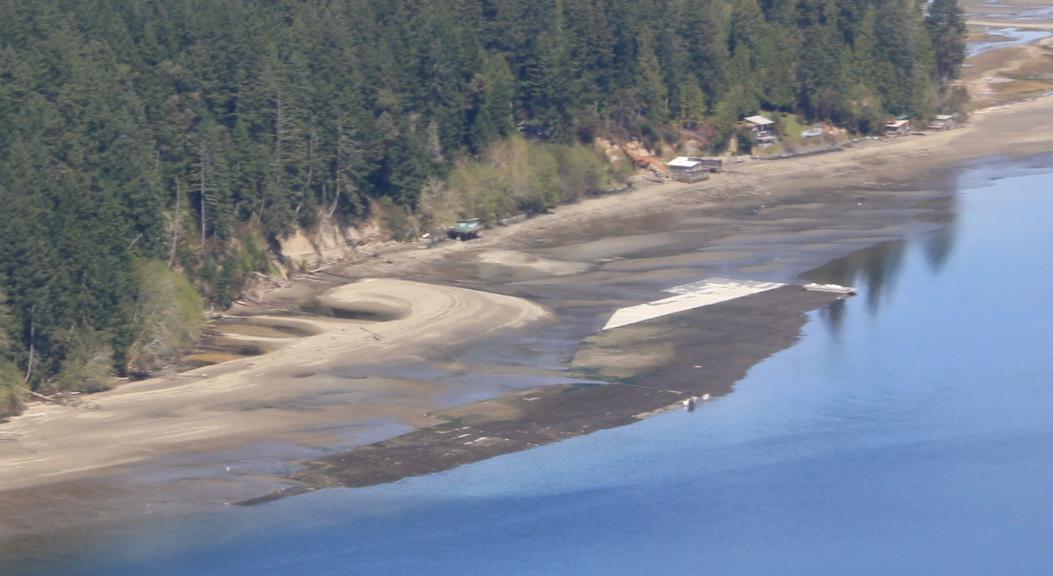
The Kitsap Sun has published an article penned by Tristan Baurick on the recent Court of Appeals decision which affirmed the Shorelines Hearings Board denial of a permit for a geoduck operation adjacent to Burley Lagoon (circled in red below).

Not here.  At least not now anyway.

One loss won't stop the machine.
While the Court of Appeals brought pause to one operation, the industry continues to press forward, flush with cash from its current operations, prepared to spend what it takes to expand. Another permit application for a 25 acre geoduck operation in Burley Lagoon (body of water in the upper right of the picture above) was submitted by Taylor shellfish to Pierce County who issued a "determination of significance", triggering a required Environmental Impact Statement. Taylor chose to go ahead and create an EIS, initially suggesting 3 alternatives: the 25 acre operation; a 17 acre operation; or continuation of what some contend is an unpermitted expansion of aquaculture operations within Burley Lagoon. The cessation of the current operations and restoration of the area was not an alternative Taylor Shellfish offered.

An intensification doesn't mean
you have to pay more in property taxes.
Nor that you need a permit.
Taxes are up: to $257 (+$12) for the parcels above.

It's only an "intensification" so it's okay - no permit required and your taxes won't go up.
Comments on the EIS scoping noted complaints to Pierce County about noise, beaches being cleared of native habitat and structure, and navigational hazards which Pierce County simply said were an "intensification" of operations, and as such, required no permits. Nor an increase in assessed value. Taylor, only leasing, need not worry about any increase in value as they don't pay the property tax. The owners who reside in Kirkland apparently need not worry much either; the 177 acres above are required to pay $257, $12 more than when Taylor's "intensification" began. Some refer to the agency responses (or lack of them) as "representation without taxation."

Is $230,000 a lot of money?
Glover Park Group ("Own the Conversation") 
is more than happy to take it.

Meanwhile, in Washington DC, lobbyists have discovered Taylor Shellfish has money.
Recent reports have revealed there is more to do with profits from geoduck operations than hire contract scientists and attorneys, who are currently on full display in Thurston County where a hearing is being held November 28 [click here for agenda] on another operation being proposed by Taylor Shellfish, in Zangle Cove. The lobbying firm Glover Park Group has received $230,000 from the shellfish industry in order to help "Own the Conversation" as the press regulators to lessen oversight of their operations.

It's supposed to look that way.

Who did you buy those glasses from and who was whispering in your ear?
Perhaps taking a lesson from Glover Park Group, when a shoreline owner complained to the Department of Ecology about the ongoing mess a geoduck operation was creating, DOE replied, in essence, that it's supposed to look that way. Presumably they asked the industry about it and were told these tubes had been pulled as part of an ongoing operation and were retrieved quickly. Apparently lost on the recipient was the fact that these tubes are buried in sediment (i.e., they were not retrieved quickly) and have little to no marine growth on them, indicating they more likely were recently inserted tubes dislodged after a storm event. It appears paying $230,000 to learn how to "control the conversation" has its returns.

Get involved.
You can control the conversation. Tell Governor Inlsee it is he should step up and stop this invasive activity taking over Puget Sound's intertidal area which is not for the benefit of the state, but for a few corporations and the Chinese.

Governor Inslee: https://fortress.wa.gov/es/governor/
Legislative and Congressional contacts:
http://app.leg.wa.gov/DistrictFinder/


Thursday, October 8, 2015

Senate Considers Eliminating the Need for a Permit to Apply Pesticides on Navigable Waters

Should you need a permit
for the application of pesticides
onto navigable waters?
Protect Our Shoreline's photo.
Some in the Senate believe
"it is a burden."
 
Some things money can buy.
Politics and pesticide application in US waters: Don't like that you have to get a permit to spray pesticides in US waters? Have Congress pass a bill saying you don't need one.

The Independent Shellfish Growers of Washington (ISGW), an organization based out of Willapa Bay, has released an email asking a bill before the Senate NOT be passed (see below for complete email). Innocently titled as "Sensible Environmental Protection Act of 2015" the bill's purpose is to "...clarify Congressional intent regarding the regulation of the use of pesticides in or near navigable waters, and for other purposes." (see https://www.congress.gov/…/114th-co…/senate-bill/1500/titles) That "intent" would be to eliminate the requirement to obtain a permit for point source application of pesticides into navigable waters.

Some things it cannot.
ISGW has asked for support by signing a petition, asking Senators to NOT pass this bill. There is a great deal of money behind the bill and political support. You can make a difference by signing the petition or by contacting your elected officials and telling them to NOT support S. 1500, no matter what the title.
(Petition located here: http://petitions.moveon.org/sign/stand-against-pesticide…)
(Senate contact information may be found here: http://www.senate.gov/…/contact_information/senators_cfm.cfm)
Get involved.
Get involved. The waters of the United States and species they support are too important to allow passage of this bill.
 
Email from ISGW:
 
Poisons that state,{ Never allow near water } on their label will be used without environmental oversight.
Hi, The Senate committee charged with protecting our environment just passed a bill that would make it a lot easier to spray pesticides in and around our rivers, lakes, and streams. The bill should be called "The Contaminate Waters at Will Act" since it eliminates the need for permitting to spray pesticides into our waterways. The documented health hazards and loss of wildlife attributed to pesticides are the exact reason why businesses and industries are required to obtain permits to spray in and around bodies of water. Please tell your senators to stand against this reckless action now. That's why I signed a petition to The United States Senate. Will you sign this petition??????
                        Click here: http://petitions.moveon.org/sign/stand-against-pesticide?source=s.em.mt&r_by=129211 Thanks!
We have apposed the rotten science that is never contested with the real facts to the point of  our members not selling their oysters to the unsuspecting public. We can not make the whole world aware because the big, and sometimes biggest oyster company's are to powerful with the media.I suggest you look up poison oyster or chemicals in Willapa bay Wa. Also google the Bloomberg press article.
Independent Shellfish Growers of Wa. State.

If you are interested in helping other than this petition we need media access to address the issue with science and first hand knowledge.
Radio, T.V., Magazines , Enviromental Groups and Papers

Thursday, April 2, 2015

Superior Court will Decide the Detienne/Chelsea Subtidal Geoduck Farm Permit Tomorrow

[Update 4/3: The Superior Court has ruled in favor of the Shorelines Hearings Board decision to deny the permit. Details will be provided when available.]

What: Superior Court will decide whether the Shorelines Hearings Board decision to deny the permit for the Detienne/Chelsea subtidal geoduck farm will stand or be reversed.
When: 1:30
Where: Thurston County Superior Court  
2000 Lakeridge Drive 
Building 2 
Olympia 98502  
Why it's important: The Shorelines Hearings Board reversed Pierce County's approval of this permit saying its uniqueness should have resulted in Pierce County having denied the permit. It is the first subtidal geoduck farm in Puget Sound, within one of the only remaining eelgrass beds in south Puget Sound. 
SHB Decision: "the Permit is therefore DENIED." You may read the SHB decision here.
 
Permit denied by the SHB,
reversing Pierce County's decision.
 
 
To recap (from Friends of Burley Lagoon):   Pierce County originally  granted a Permit, with conditions,  for the geoduck farm in Wauna.  Citizens there, with the Coalition, appealed the County's decision to the Shoreline Hearings Board.   After a six- day hearing, the SHB denied the permit.   Pierce County (via Deputy Prosector advisor Jill Guernsey) appealed the SHB decision initially on a procedural matter, DeTienne/Chelsea Farms cited other issues.   The issues were heard by a single Judge of Thurston County Superior Court.  The Judge denied Pierce County's procedural portion;  the other issues will be decided at tomorrow's hearing before the same Judge.
 
Politics Pays: Jill Guernsey, Deputy Prosecuting Attorney 
gets some money from Plauche and Carr - after she appeals.
 
Ms. Guernsey runs for Mayor of Gig Harbor - unopposed - and wins
Entwined within the story is another of shellfish politics. In February of 2013, Pierce County, through their attorney Jill Guernsey, decided to appeal the SHB reversal of their granting the permit (see Ms Guernsey/Pierce County Petition for Review here, which was denied). In March of 2013, a $500 donation to Ms. Gurensey's campaign  from the law firm representing Chelsea and Detienne, Plauche and Carr, was recorded as having been made (see Plauche Carr Petition for Review here). In April of 2013, Ms. Guernsey formally kicked off her Gig Harbor mayoral campaign. She
 
Does a job depend on political donations?
Dennis Hamberg, Director of Pierce County
Planning and Land Services helps out too.


Wednesday, March 18, 2015

Taylor Shellfish Has a New Friend: Lobbying Firm Glover Park Group

[Update 3/19: Taylor's "new friend", Glover Park Group, is mentioned in a 3/17 Equal Times article entitled "Pr firms at the service of human rights abusers." It will be fascinating to see what sort of "conversation" GPG develops for Taylor Shellfish and the Pacific Coast Shellfish Growers Association.]
 
The best politics money can buy.
Control the process, you get what you want.
Sometimes. Sometimes not.


The little fish in the big pond needs a big fish for a friend
Taylor Shellfish and the Pacific Coast Shellfish Growers Association, through their law firm Plauche and Carr, have hired WPP's Glover Park Group to address federal permitting issues in Washington DC. WPP bills itself as "the world's largest communications services group, employing 179,000 people working in 3,000 offices in 111 countries." As one of WPP's >450 separate companies listed, GPG is noted as being "...a nationally-recognized strategic communications and government relations firm."

Still a little fish of the  new big friend
To put in perspective where Taylor Shellfish falls in GPG's client list, Foreign Influence Explorer reports on foreign funding sources and expenditures of lobbying groups. It notes GPG's client list includes Abu Dhabi Investment Authority ($342,000 in 2013), Government of the Arab Republic of Egypt ($750,000 in 2014), Taipei Economic And Cultural Representative Office in the United States ($1.6 million received in 2013, $353,000 in 2014).  Open Secrets reports that domestically, Berkshire Hathaway ($180,000), the American Bankers Association ($280,000), United Health Group ($240,000) and Fuels America ($620,000) are a few of their clients. In the past, Taylor Shellfish has been reported to have spent $20,000 with Vitello Consulting, in 2006. The Pacific Coast Shellfish Growers Association is reported to have spent $50,000 with lobbyist David Weiman, in 2008. In short, while past experience is no indication of future performance, in Washington DC they are still a small fish, but to their credit, they are focused.

Taylor Shellfish/PCSGA: We need to "control the conversation" on Federal permitting
The Sunlight Foundation Reporting Group reports the purpose GPG has been enlisted by Plauche and Carr, fronting for Taylor Shellfish and the Pacific Coast Shellfish Growers Association, is to deal with "Federal permitting related to shellfish operations." Whether this is to address current issues Taylor Shellfish is not pleased with or to begin lobbying for changes in the upcoming Nationwide permits for 2017 which the Corps of Engineers uses in its oversight of the shellfish industry is unknown. Maybe they just need help communicating. What is known is "controlling the conversation" and "leading the action" with "rock stars" is one way to get what you want. Sometimes. Sometimes not.

Get involved. The shellfish industry is and they don't like regulatory oversight.

Thursday, February 26, 2015

Get involved: Sign the petition to tell Governor Inslee to stop enabling plastic and pesticide pollution in Puget Sound.


Sign the petition to tell Governor Inslee to stop enabling plastic and pesticide pollution in Puget Sound, and stop transforming the critical marine habitat of Puget Sound. Sign here: http://www.thepetitionsite.com/267/157/164/governor-inslee-stop-enabling-plastic-and-pesticide-pollution-in-puget-sound/

It's not grandpa Taylor's oyster farm.

The intensity of aquaculture being promoted as a "preferred use" of Puget Sound's critical marine habitat is not what existed when the Shoreline Management Act was enacted. In fact, the current level of activities occurring now, and which this industry is pressing for more of, is exactly what the Shoreline Management Act was enacted to protect Puget Sound's critical marine habitat from.

Telling Governor Inslee that Taylor Shellfish
promotes clean water does not mean they
can lay plastic bags and tubes across the sediments.
Bill Dewey, Taylor Shellfish political lobbyist.
"Our industry generates as much as two Wal Mart stores!"

Well paid political lobbyists, attorneys, and contract scientists should not be allowed to convince the Governor and regulatory agencies that promoting "clean water" means they may now transform every marine habitat in Puget Sound. Nor should it mean they should be allowed to work at any hour of the night and drive wildlife out of Puget Sound.

Look - our PVC feeds Scoter (diving ducks).
"It's mutually beneficial."
Agencies believe this? And is that Scoter
on the right going under the net?
 
What money can buy from these contract scientists was seen recently in Sequim where Taylor Shellfish tried to convince Clallam County residents a 30 acre PVC forest would be good for the wildlife. Within that presentation a series of slides was put together showing Scoter diving and eating mussel off of PVC tubes. It was little more than a well staged promotion, in which the netting which blocks Scaup, and other diving avian native to Puget Sound from their food source, was pulled back. Exposed, growing on the artificial "structure" was the food source which netting is in place for up to two years to keep these native species away from. (Click here to see the entire "show" presented by Taylor's contract scientists.)
 
If you believe that, then look...
it's a flounder swimming between tubes.
This is habitat at its best.
Nets? Oh, well, we were hoping you wouldn't ask.
 
Get involved. The shellfish industry has been for a long time and they have the money to create the impression that PVC "habitat" is good for Puget Sound. Unfortunately, some politicians and some in the regulatory agencies believe it.


Wednesday, May 7, 2014

Shellfish Lobbyist Complains of Lobbying to Create a Marine Sanctuary

Bob Rheault
Shellfish Lobbyist
"My lobbying is different."


Bob Rheault, shellfish lobbyist and head of the East Coast Shellfish Growers Association (ECSGA), has complained about the creation of a marine sanctuary in Massachusetts. Apparently "surprised" at the state's House action (it must still be passed by the Senate) he has begun a lobbying campaign himself, intended to show this is little more than the "affluent" attempting to keep "muddy people" out of the waters and tidelands in the area. Apparently he believes the lobbying he does for his industry to be allowed to go wherever, whenever, and do whatever, is different.

Shellfish industry lobbying is different.
They also serve oysters.
"Our legislators have a healthy appetite for good oysters."

"buy off the legislature"
In his political press to prevent the sanctuary's creation Mr. Rheault attempts to frame the political process as the affluent buying politicians off. He apparently forgets his trips to Washington DC  where his "walk on the hill" with his "legislative agenda" in hand is pressed on politicians. There, oysters are used as "hard currency" to influence the political process at the many banquets the industry sponsors.
 It's structure so it's good.
Really?

"the gear provides excellent habitat"
He claims the plastic mesh bags create "structure" which creates an artificial reef. He ignores the reality that this "structure" first transforms the habitat they are placed in. More importantly he ignores the reality that this so called "reef" is destroyed when the bags are removed at harvest time.

"dirty muddy people"
He describes shellfish workers as little more than "dirty muddy people" who he believes people do not wish to look at. Mr. Rheault's employees may want to ask how he perceives them the next time he tells them during a winter's low tide at midnight in a storm that it's time to go harvest oysters for him and his political friends.

politics is messy
Industry lobbyist Mr. Rheault may want to consider how he is perceived when he expresses his deep concerns over political lobbying. Especially when it is over trying to protect the marine environment his wealth is derived from.

Thursday, February 21, 2013

Politics Can Be Messy

"Laws, like sausages, cease to inspire respect in proportion as we know how they are made." John Godfrey Saxe, 1869
 
 Representative Brian Blake
(D) 19th Legislative District
Agriculture and Natural Resources Committee Chair


February 21, a hearing on House Bill 1894 before the House Agriculture and Natural Resources Committee, Chaired by Representative Blake, was in part like watching sausage be made. It was not inspiring.

"My finger is on the button controlling the sausage machine."
As Chair of the Committee listening to testimony for and against House Bill 1894, Representative Blake is able to control what testimony is heard and recorded and what is not. Should he feel testimony is straying too far from addressing the specific bill he is able to "stop the sausage machine" by turning off the microphone in front of whomever may be testifying, preventing that testimony from becoming part of the public record. The machine did not run smoothly on the 21st.

Representative Seaquist
(D) 26th Legislative District
Sponsor of HB1894
 

House Bill 1894 
[click here for HB1894 bill digest]
[click here for complete bill]
House Bill 1894 is the result of Representative Seaquist having had numerous concerns expressed to him by residents on or near Burley Lagoon over the proposed expansion of shellfish operations both within and nearby the enclosed bay. Included was feedback from the shellfish industry, including Taylor Shellfish who had leased the ~300 acres contained within the lagoon. Politics is messy. HB1894 is in part focused on promoting the shellfish industry and in part focused on expanding research to address the growing and evolving shellfish industry's methods and structures used. [click here to hear Representative Seaquist's presentation before the committee] Washington taxpayer funds would pay for most of it. Many taxpayers testifying did not feel they should fund programs which, on the surface, appear to benefit the shellfish industry who pays little in the form of taxes.

Property taxes paid in the south half of Burley Lagoon
Tideland: <$400
Upland: >$120,000

Who pays for what?

Citizen testimony on proposed bills is rarely refined.  [click here for video of citizen testimony which was cut off] (Note: If TVW.ORG is busy you may have to click on the "refresh" button.)
In a perfect world citizen testimony before a committee addresses specific portions of a bill and reasons why they are for or against it, with possible solutions, followed by the committee chair thanking them. Reality is quite different, something Representative Blake has no doubt seen many times. Whether what Representative Blake did was reasonable is subjective. Whether the frustration his actions created was warranted is also subjective. It was certainly a messy part of the hearing and not particularly inspiring for anyone.

Saturday, February 2, 2013

Shellfish Politics in DC and a Vision for the Future

The East Coast Shellfish Growers Association (ECSGA) and Pacific Coast Shellfish Growers Association (PCSGA) have wrapped up their annual "Walk on the Hill" in Washington DC. Posted on the Facebook page of the ECSGA, among pictures of "the event" are two of significance. One, "The Vision", shows oyster farms fronting the shoreline in France. The second, "The Process", shows Kevin Lunny (owner of Drakes Bay Oyster Company) and other shellfish growers meeting with legislators in Washington DC.

A Vision of "Compatibility"
Oyster farming in Arcachon, France, where a Herpes virus
outbreak caused 80% of juvenile oysters to die.
High density shellfish farming
is not without risk.
 
"The Process"
"Pressing the flesh yields instant results over wine and oysters.
Our legislators have a healthy appetite for good oysters
 and they want to help us
create more green jobs in rural coastal areas." (ECSGA)
Kevin Lunny [center, owner of Drakes Bay Oyster Company]
 
High density shellfish farming of non-native species is not without risks. As any parent of a child in school knows, classrooms are breeding grounds for virus, spreading from one child to the next and home. In a natural environment of native species growing in natural densities, disease resistance has evolved over generations. Shellfish are not competing with each other for resources so are not stressed in their various life stages, continuing to remain healthy and thrive.
 
Infected Pacific oyster (bottom) and healthy (above).
 
 
Contrast this with the die offs from the Herpes virus in the high density plantings found in France. Contrast this with the die offs of the non-native Pacific oyster larvae in "hatcheries" from deep ocean upwellings in the northwest, which other species of oysters are able to cope with. Contrast this to the "Pacific oyster mortality syndrome" in Australia which overnight decimated the Pacific oyster population. [click here for article]
 
As with net pen fish farming, and any other highly concentrated population of species, rapid outbreaks and die-offs increase dramatically. "The Vision" does not come without risks. "Pressing the flesh" only risks spreading disease. Are shellfish politics healthy?

Tuesday, January 29, 2013

Shellfish Politics in Washington DC: Is Gregoire the right package for the EPA?

Currently taking place in Washington DC is the annual "Walk on the Hill" where shellfish growers, lobbyists and their attorneys meet with congressional leaders and agencies to press their case for expanding the shellfish industry. Festivals of wine and oysters as well as use of the Acadiana Restaurant are annual lobbying events.

"Simmable, diggable, fishable"
For who?
Bill Dewey from Taylor Shellfish
teaching then Governor Gregoire
what "diggable" is to the shellfish industry.

Perhaps the most significant effort being put forth will be to get Washington's outgoing Governor Gregoire nominated to head the EPA. She's a woman who used to be Washington's Attorney General who also headed Washington's Department of Ecology. Isn't it a perfect package? It is, but it takes more than a package mailed from the northwest to run the agency created to protect human health and the environment.

It takes more than a package
of sound bites to get things done.

As was so well put in 2012 by another writer describing Governor Gregoire's progress on improving the waters of Puget Sound after five years of effort: "Swimmable, diggable, fishable" makes a nice sound bite — and certainly a level below which one wouldn't want the health of the Sound to sink — but it would hardly constitute recovery." [click here for full article]

Being reactive - or inactive - does not make for sound leadership of an agency where being proactive is critical.
Pointed out in a December 2011 press conference, while head of the Department of Ecology it took the shellfish industry dressing "her down" in the late 1980's to get the agency she was then responsible for (the Department of Ecology) to act on increasing pollution levels in the waters of Puget Sound.

When asked at a 2012 press conference what actions she would take on the proposed coal terminals in Washington through which hundreds of tons of coal would be exported to China, the largest producer of CO2 in the world, she chose carefully crafted political answers learned while Attorney General to say "nothing." This after having been cheered by NOAA head Janet Lubchenco as being a "strong leader" addressing CO2 emissions. And supporting "green" technologies.

Oysters shipped from Washington continue to cause significant numbers of illness from Vibrio parahaemolyticus, something the state's Department of Health under then Governor Gregoire was responsible for controlling. This despite the FDA expressing strong concerns over the shellfish industry's inability to control outbreaks from Vibrio years ago. The shellfish industry's response was to express concern about "undue economic impacts to shellfish producers."

These are not indicative of being a strong leader acting for the long term health of the people and the environment. It is a person reacting to political pressures from industries.

It takes more than a package.
Running an agency the size of the EPA, whose responsibility is to protect human health and the environment, takes more than a package of soundbites shipped from the northwest. And a few oysters.

 
No doubt the shellfish industry feels different, given her support for lessening regulatory oversight of that industry, allowing it to expand wherever they would like in those "swimmable, diggable, fishable" waters. No doubt it will also be a topic of conversation January 30 at the Acadiana Restaurant over raw oysters. Let's hope nobody gets sick.

Thursday, January 24, 2013

California Coastal Commission to Drakes Bay Oyster Company: Cease and Desist

Drakes Bay Oyster Company Just Doesn't Get It

Does the shellfish industry?
 
The California Coastal Commission (CCC) will meet February 7, 2013 to discuss a new Cease and Desist Order against Drakes Bay Oyster Company (see "ENFORCEMENT" below). The CCC will also discuss proposed actions to address DBOC's unpermitted development and actions taken which were inconsistent with a previous Cease and Desist Order issued December 12, 2007. CCC concerns about that Order not being followed by DBOC were expressed in a letter dated December 29, 2011.
[click here for Staff Report on 2007 Cease and Desist Order]
[click here for 2011 follow-up letter from CCC]

Now, new violations related to the discharge and spread of the nonnative invasive tunicate Didemnum vexillum (Dv) and the nonnative Manila clam will also be discussed.

Nonnative invasive Didenmum vexillum
 on oysters from DBOC farm.
When dislodged during handling,
colonies of Dv drift and survive for weeks
attaching to any hard substrate, 
including native shellfish.


Cessation and Restoration of Unpermintted Development Required
In addition to addressing the past, ongoing and current violations, the CCC will also discuss Restoration Order No. CCC-13-RO-01. That order will require immediate cessation of unpermitted practices and restoration onshore and within Drakes Estero.

The shellfish industry doesn't get it.
Drakes Estero where DBOC operates is not the only area where shellfish operators take a cavalier attitude towards their impacts on the marine environment.
  • In Puget Sound, Taylor Shellfish's Diane Cooper's most famous line is impacts from shellfish farming are "at worst benign, and at best they're beneficial."
  • When regulations are enforced the typical response from the shellfish industry is to appeal then sue. Currently, Taylor Shellfish is appealing denial of a permit for a 58 raft mussel farm, believing cumulative impacts required by the Examiner should not be considered.
  • Seattle Shellfish is suing the Corps of Engineers, claiming inaccurate information provided by the shellfish industry should be used by USDFW and NMFS to determine whether industry impacts are adverse or not.
  • Despite Washington's Attorney General describing Willapa Bay as a "chemical soup" the shellfish industry now wants to add the herbicide Imazamox to remove eelgrass it finds "bothersome" in its attempt to grow the nonnative Manila clam.
  • Despite California's ban on Gulf Coast oysters harvested during warm months bringing the deadly disease caused by raw shellfish containing Vibrio vulnificus to a halt, and the continuing infections from Vibrio parahaemolyticus (including an outbreak traced to DBOC this summer) the shellfish industry feels their economic needs outweigh the families of those who become sick, or die, and complain about how the FDA communicates warnings.
  • Creation of "jobs" falls flat when Taylor Shellfish has to let go 160 employees (almost 1/2 of their employees) due to a lack of documentation, bringing forward the questions "just who wants these jobs" and "who is it that really benefits"?
Nonnative invasive tunicate Dv found
on Taylor Shellfish
mussels in Totten Inlet, Puget Sound.
 
Geoduck farm's PVC pipes and
grow out bags for oysters.
Taylor Shellfish - "at worst, benign."
 
Shellfish Politics
Currently the East Coast Shellfish Growers Association and the Pacific Coast Shellfish Growers Association are organizing for their annual "walk on the hill" in Washington DC, taking place at the end of this month. Oyster bars will be open and shellfish recipes will be provided to politicians. Complaints of "burdensome regulations" and "shellfish initiatives" and "jobs" will be bantered about, with little care for the long-term impacts of their growing industrial activities. At least one state, California, is at the fore-front of being sure impacts from these activities are kept under control. We can only hope other states will also "get it" before it gets away.


CCC Meeting, February 7, 2013

[click here for full agenda]

ENFORCEMENT

11.ENFORCEMENT REPORT. Report by Chief of Enforcement on Statewide Enforcement Program. (LAH-SF)
11.1.Cease and Desist Order No. CCC-13-CD-01 (Drakes Bay Oyster Company, Point Reyes National Seashore, Marin Co.) Public hearing and Commission action on proposed Cease and Desist Order to address unpermitted development related to offshore aquaculture operations and actions taken inconsistent with Consent Cease and Desist Order No. CCC-07-CD-11, on property located at 17171 Sir Francis Drake Blvd, Marin County, identified by the Marin County Assessor’s Office as Assessor Parcel Number 109-13-017, and in the adjacent waters of Drakes Estero. The proposed Cease and Desist Order authorizes and requires Drakes Bay Oyster Company: (1) to cease and desist from conducting or maintaining unpermitted development; (2) to remove onshore unpermitted development; (3) to remove and/or cease unpermitted development, including discharge of invasive Didemnum sp., Manila clams, and marine debris from Drakes Estero and beyond; and (4) to follow requirements to seek Coastal Act authorization for specified unpermitted development, and (5) to limit any interim operations and conduct them pursuant to a set of guidelines designed to protect the environment, including by controlling the invasive Didemnum sp. (HJ-SF)
11.2.Restoration Order No. CCC-13-RO-01 (Drakes Bay Oyster Company, Point Reyes National Seashore, Marin Co.) Public hearing and Commission action on proposed Restoration Order authorizing and directing Drakes Bay Oyster Company to address unpermitted development related to offshore aquaculture operations and actions taken inconsistent with Consent Cease and Desist Order No. CCC-07-CD-11, on property located at 17171 Sir Francis Drake Blvd, Marin County, identified by the Marin County Assessor’s Office as Assessor Parcel Number 109-13-017, and in the adjacent waters of Drakes Estero. Actions required by the proposed Restoration Order to address unpermitted development on the property include: (1) cessation of certain unpermitted practices and development; and (2) restoration of those areas, both onshore and within Drakes Estero, impacted by unpermitted development. (HJ-SF)

Saturday, November 3, 2012

Mason County Shoreline Master Program: Only to Protect Local Shellfish Jobs?

Next meeting: November 14, 2012; 9:00 AM to12:00 PM; Public Works Building - 100 W Public Works Drive; Discussion Item: Draft SMP
Contact: LaJane Schopfer  lajanes@co.mason.wa.us,  360-427-9670 X408
 
600Hp engine exhaust discharged
directly into the waters of Puget Sound
with wakes eroding the shoreline.

Is the purpose of Mason County's Shoreline Master Program (SMP) update to "keep waters clean and healthy" in order to "protect local shellfish industry related jobs"? According to a recent post card from Washington State University Extension on the SMP update, mailed to over 10,000 shoreline residents, it would seem that way.

Nowhere in the mailing is the Shoreline Management Act's (SMA) goal of preventing the "uncoordinated and piecemeal development of the state's shorelines" to be found. Nowhere is the inclusive "fostering all reasonable and appropriate uses" found. Instead we are led to believe its primary purpose is to protect the shellfish industry, contrary to the legislative findings of the SMA, RCW 90.58.020 (see below).

Harstine Island Geoduck Farm

Mason County's promotion of the Shoreline Master Program as clearly favoring the shellfish industry is no better example of how adept the corporate shellfish industry is in using the political process for its own gain. Immense profits generated from geoduck farming create funds to pay for attorneys, "government outreach" employees, and public relation firms. They in turn craft shoreline regulations through local political influence allowing tideland structures for "aquaculture" to be placed in the tidelands with little to no regulatory oversight, yet severely restrict other reasonable development of any other shoreline use, recreational or otherwise. They are relentless in their push back on any oversight (e.g., Kitsap County has just received a third "re-write" of their SMP update from attorneys representing the shellfish industry).

"You can only see the tubes 20% of the time."

What gain is found in preserving the nearshore environment when the adjacent tidelands are being smothered with nets, grow-out bags and PVC tubes? What gain is there in restricting recreational floats and docks when mussel rafts, geoduck nurseries and oyster rafts are allowed to proliferate? Are a few shellfish industry related jobs worth an unregulated transformation of the entire intertidal ecosystem where native species are displaced by non-native species, or are eradicated with chemical sprays? Should the aquaculture industry be prioritized over all other uses of the shoreline? Mason County has been convinced it should be and will allow it to be so unless the public engages in the process.

The Shoreline Management Act RCW 90.58.020

The legislature finds that the shorelines of the state are among the most valuable and fragile of its natural resources and that there is great concern throughout the state relating to their utilization, protection, restoration, and preservation. In addition it finds that ever increasing pressures of additional uses are being placed on the shorelines necessitating increased coordination in the management and development of the shorelines of the state. The legislature further finds that much of the shorelines of the state and the uplands adjacent thereto are in private ownership; that unrestricted construction on the privately owned or publicly owned shorelines of the state is not in the best public interest; and therefore, coordinated planning is necessary in order to protect the public interest associated with the shorelines of the state while, at the same time, recognizing and protecting private property rights consistent with the public interest. There is, therefor, a clear and urgent demand for a planned, rational, and concerted effort, jointly performed by federal, state, and local governments, to prevent the inherent harm in an uncoordinated and piecemeal development of the state's shorelines.

It is the policy of the state to provide for the management of the shorelines of the state by planning for and fostering all reasonable and appropriate uses. This policy is designed to insure the development of these shorelines in a manner which, while allowing for limited reduction of rights of the public in the navigable waters, will promote and enhance the public interest. This policy contemplates protecting against adverse effects to the public health, the land and its vegetation and wildlife, and the waters of the state and their aquatic life, while protecting generally public rights of navigation and corollary rights incidental thereto.

The legislature declares that the interest of all of the people shall be paramount in the management of shorelines of statewide significance. The department, in adopting guidelines for shorelines of statewide significance, and local government, in developing master programs for shorelines of statewide significance, shall give preference to uses in the following order of preference which:

(1) Recognize and protect the statewide interest over local interest;

(2) Preserve the natural character of the shoreline;

(3) Result in long term over short term benefit;

(4) Protect the resources and ecology of the shoreline;

(5) Increase public access to publicly owned areas of the shorelines;

(6) Increase recreational opportunities for the public in the shoreline;

(7) Provide for any other element as defined in RCW
90.58.100 deemed appropriate or necessary.

In the implementation of this policy the public's opportunity to enjoy the physical and aesthetic qualities of natural shorelines of the state shall be preserved to the greatest extent feasible consistent with the overall best interest of the state and the people generally. To this end uses shall be preferred which are consistent with control of pollution and prevention of damage to the natural environment, or are unique to or dependent upon use of the state's shoreline. Alterations of the natural condition of the shorelines of the state, in those limited instances when authorized, shall be given priority for single-family residences and their appurtenant structures, ports, shoreline recreational uses including but not limited to parks, marinas, piers, and other improvements facilitating public access to shorelines of the state, industrial and commercial developments which are particularly dependent on their location on or use of the shorelines of the state and other development that will provide an opportunity for substantial numbers of the people to enjoy the shorelines of the state. Alterations of the natural condition of the shorelines and shorelands of the state shall be recognized by the department. Shorelines and shorelands of the state shall be appropriately classified and these classifications shall be revised when circumstances warrant regardless of whether the change in circumstances occurs through man-made causes or natural causes. Any areas resulting from alterations of the natural condition of the shorelines and shorelands of the state no longer meeting the definition of "shorelines of the state" shall not be subject to the provisions of chapter
90.58 RCW.

Permitted uses in the shorelines of the state shall be designed and conducted in a manner to minimize, insofar as practical, any resultant damage to the ecology and environment of the shoreline area and any interference with the public's use of the water.

Friday, August 31, 2012

Pickering Passage Closed to Commercial Harvesting of Oysters

Pickering Passage has been closed to commercial harvesting of oysters due to illnesses traced directly to oysters harvested from this growing area. This is now the 9th commercial growing area which has been closed because of illness caused by oysters harvested from Puget Sound. These illnesses continue a known and growing problem.

Laboratory-Confirmed cases of Vibriosis
(Note: CDC estimates for every laboratory
confirmed case >40 are not reported to CDC.)
 
The annual outbreak of vibriois caused by oysters harvested from Puget Sound is an ongoing annual problem. When the FDA attempted to deal with lowering numbers through press releases the Pacific Coast Shellfish Growers Association reacted with complaints of "economic harm" (see Issue Paper below). Currently the "Blue Ribbon Panel" on Ocean Acidification is recommending actions specifically for the benefit of the shellfish industry with estimated costs at over $4 million (Note: A number of actions' estimates were not available, only noting they were "dependent on scale.") Decisions on the allocation of taxpayer dollars for the shellfish industry might consider the fact that warming temperatures will bring with it an increase in the naturally occurring Vibrio parahaemolyticus and most likely its more deadly cousin Vibrio vulnificus (currently found in Gulf State oysters which kills 50% of those who contract it). Allocating a portion of those taxpayer dollars to prevent outbreaks might be something for the "Public Outreach" committee and panel to consider.
 
 
PCSGA Issue Paper on FDA Press Releases
(click to enlarge)


Sunday, June 17, 2012

Imazamox Spraying on Eelgrass: The Art of Shellfish Politics

Who is that lobbyist behind the curtain
so adept at influencing the Governor and agencies?
(from The Wizard of Oz)

In Ecology's recently released "Shoreline Master Program Guidance" manual (read here), the art of shellfish politics is brought to light. In discussing eelgrass, the manual clearly states the legislature defined eelgrass as a "critical saltwater habitat" which requires "a higher level of protection due to the important ecological functions they provide."
WAC 173-26-221(2)(c)(iii)
(iii) Critical saltwater habitats.
      (A) Applicability. Critical saltwater habitats include all kelp beds, eelgrass beds,


Legislation which controls the Department of Fish and Wildlife states that eelgrass "serves essential functions in the developmental life history of fish or shellfish."
WAC 220-110-250(3)(a)
(3) The following vegetation is found in many saltwater areas and serves essential functions in the developmental life history of fish or shellfish:
      (a) Eelgrass (Zostera spp);

There is no distinction between species in either law passed and yet the shellfish industry was able to convince the Department of Fish and Wildlife one species is a "pest" which needs to be eliminated. Rather than change the law through the legislature, which would have required far greater public scrutiny, they instead were able to have it declared a "noxious weed".

Despite Ecology's manual pointing out what the law is, it is now considering a permit to allow for the spraying of the herbicide Imazamox on Japanese Eelgrass in Willapa Bay, adding to the other chemicals already sprayed on the state and private oyster beds. The same eelgrass which law says requires "a higher level of protection due to the important ecological functions they provide."

Whoever is behind the curtain has the financial support of the Pacific Coast Shellfish Growers Association who, in 2011, took in over $600,000; spent $90,000 for their legal counsel; and, another $36,000 for a "Government Relations Advisor".

Near Wilson Point, Harstene Island
Geoduck Farm PVC Tubes/Netting
(click to enlarge)
 "A Vision of Puget Sound's tidelands"
Painted by Taylor Shellfish